
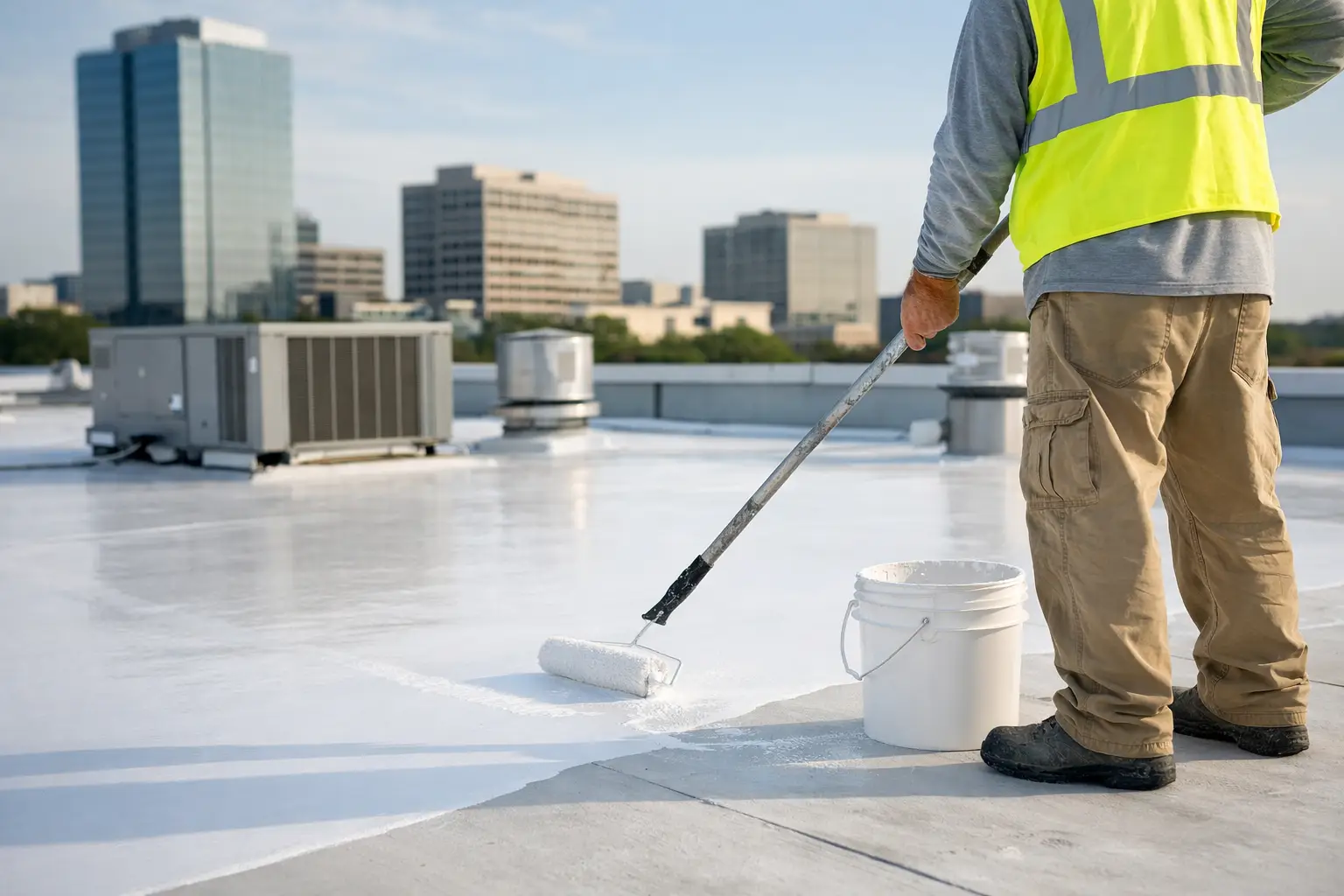
A commercial roof rarely fails without warning. Small splits around outlets, worn seams, blistering, standing water and recurring leaks are all signs that the waterproofing layer needs attention. Commercial roof coatings can be an effective way to restore protection without the cost and disruption of a full replacement – but only when the existing roof is structurally sound and properly prepared.
For property owners, landlords and facilities managers, the right decision comes down to more than the size of the leak. The roof type, its condition, drainage, previous repairs and the intended lifespan of the building all matter. A professional inspection should establish whether a coating will provide lasting value or simply postpone work that is already unavoidable.
What commercial roof coatings do
A roof coating is a liquid-applied waterproof system that cures to form a continuous protective membrane across an existing roof surface. It can be applied to many commercial flat roof systems, including felt, asphalt, concrete, metal and certain single-ply roofs, subject to compatibility and condition.
Unlike a patch repair, a coating treats the roof as a whole. The material is applied across the main field of the roof and worked carefully around details such as upstands, rooflights, drainage outlets, pipe penetrations and parapet walls. These junctions are common sources of water ingress, so workmanship at the edges matters just as much as the coating itself.
A suitable system can improve weather resistance, protect the existing roof covering from ultraviolet damage and extend the serviceable life of a roof that is nearing the end of its original finish. Some coatings also provide a reflective surface, helping to limit heat build-up in warmer weather. In Glasgow, however, the main priority is usually reliable water protection through persistent rain, frost and changing temperatures.
When commercial roof coatings are a sensible option
Coatings work best on roofs with an intact deck, broadly sound insulation and a stable existing waterproof layer. There may be surface wear, ageing, minor cracking or localised previous repairs, but there should not be widespread trapped moisture or movement beneath the roof covering.
They are often a practical choice where a business needs to keep disruption low. A full roof strip can involve noise, waste removal, restricted access and a longer programme of work. A liquid-applied coating system may be completed with less disturbance to staff, customers or tenants, particularly where access is controlled and weather windows are planned carefully.
A coating can also be worthwhile where the roof layout is complicated. Commercial roofs often have multiple vents, plant bases, ducts, skylights and service penetrations. Replacing every detail can be more involved than restoring a sound roof with a correctly specified liquid system.
That said, lower initial cost should not be the only reason to choose a coating. It must be a genuine roof restoration, not a cosmetic cover-up. If water is already entering the insulation or deck, sealing over the top can trap the problem below.
Signs your roof may be suitable
An inspection may identify a coating as an option if leaks are isolated, the roof deck feels firm underfoot where safe to assess, and existing defects can be repaired before application. The roof should also have workable falls to its outlets, with no major ongoing ponding issues.
Surface condition is particularly important. Dirt, moss, loose chippings, failed sealant and deteriorated patches need to be removed or repaired first. Coatings rely on adhesion. A clean, dry and stable surface is essential if the new membrane is to perform as intended.
When a coating is not enough
There are times when replacement is the more honest recommendation. If a roof has extensive water saturation, widespread blistering, failed insulation, rotting timber deck sections or significant structural movement, a coating is unlikely to solve the cause of failure.
Persistent standing water should also be investigated. Some coating systems are designed to tolerate ponding better than others, but no material removes the underlying drainage problem. Blocked outlets may need clearing, while inadequate falls may require more substantial remedial work. Water that sits on a roof for days places every seam, edge and penetration under greater pressure.
A roof with repeated layers of old felt and patch repairs can be another warning sign. Extra coating may look like the cheaper route, but the layers below may no longer provide a dependable base. In these cases, stripping back the failed system and installing a new roof can offer clearer long-term value and a more meaningful workmanship guarantee.
The intended use of the property matters too. A short-term lease, a planned refurbishment or a building scheduled for redevelopment may justify a different approach from a site expected to operate for decades. The right recommendation should match the building’s condition, budget and future plans.
Choosing the right coating system
There is no single best material for every commercial roof. The existing roof covering, exposure to weather, roof traffic and drainage performance all influence the specification.
Acrylic coatings are often used where a reflective finish is required and conditions allow for correct drying. They can perform well on suitable surfaces, but application conditions need close attention in the changeable Scottish climate. Rain, high humidity and low temperatures can affect curing, so timing the work properly is vital.
Silicone coatings are valued for strong weather resistance and can be a useful option on roofs that experience occasional ponding. Their surface characteristics and compatibility requirements should still be assessed carefully, especially where future recoating or repair work may be required.
Polyurethane systems can offer durable protection in areas exposed to regular foot traffic, such as routes to rooftop plant. They may be specified alongside reinforced detailing where a roof has complex junctions or higher mechanical demands.
The product matters, but preparation and application matter more. A quality coating installed over a damp, contaminated or unstable surface will not deliver the result a commercial property owner expects. Qualified roofers should follow the system specification, measure coverage rates correctly and reinforce vulnerable details rather than applying a thin layer and hoping for the best.
Preparation is where the job succeeds or fails
Before any commercial roof coating is applied, the roof should be inspected thoroughly. This includes checking the deck where accessible, assessing existing membranes, looking for splits and failed flashings, and inspecting outlets, gutters and roof edges.
Repairs are completed before coating begins. Loose materials are removed, cracks are treated, seams are reinforced where required and damaged details are rebuilt. The roof is then cleaned to remove debris, biological growth and contaminants that could prevent adhesion.
Drying time cannot be rushed. Moisture beneath or within the coating system can lead to adhesion failure, bubbling and premature breakdown. This is one reason experienced contractors plan commercial roofing work around the forecast rather than making promises that ignore the weather.
Access and safety also need proper planning. Commercial sites may require edge protection, safe access routes, restricted work areas and coordination around deliveries or operating hours. A contractor should set out the scope clearly so building managers understand what will happen, how long it will take and whether any areas need to be kept clear.
Looking after a coated commercial roof
A coating is not fit-and-forget protection. Regular inspections help identify blocked drainage, accidental damage from maintenance contractors, loose plant equipment and early signs of wear before they become leaks.
For most commercial premises, a planned inspection after severe weather and at least once or twice a year is sensible. Outlets and gutters should be kept clear, particularly in autumn when leaves can quickly restrict drainage. Any damage should be repaired using compatible materials, rather than sealed with a random product that may not bond properly.
Keeping records of inspections and repairs is also useful for landlords and facilities teams. It provides a clearer maintenance history, supports warranty requirements where applicable and makes future budgeting more straightforward.
Get the decision right before work starts
The best commercial roofing solution is the one that protects the building properly for the right length of time. A coating can extend the life of a sound roof, reduce disruption and provide a cost-effective waterproof finish. It cannot compensate for saturated insulation, failed structure or poor drainage.
Trusted Roofing Ltd provides clear roof inspections and practical advice for commercial property owners across Glasgow and surrounding Lanarkshire areas. If your flat roof is leaking, weathered or approaching the end of its service life, arrange an assessment before committing to a coating or replacement. A straightforward inspection now can prevent an avoidable emergency repair later.