
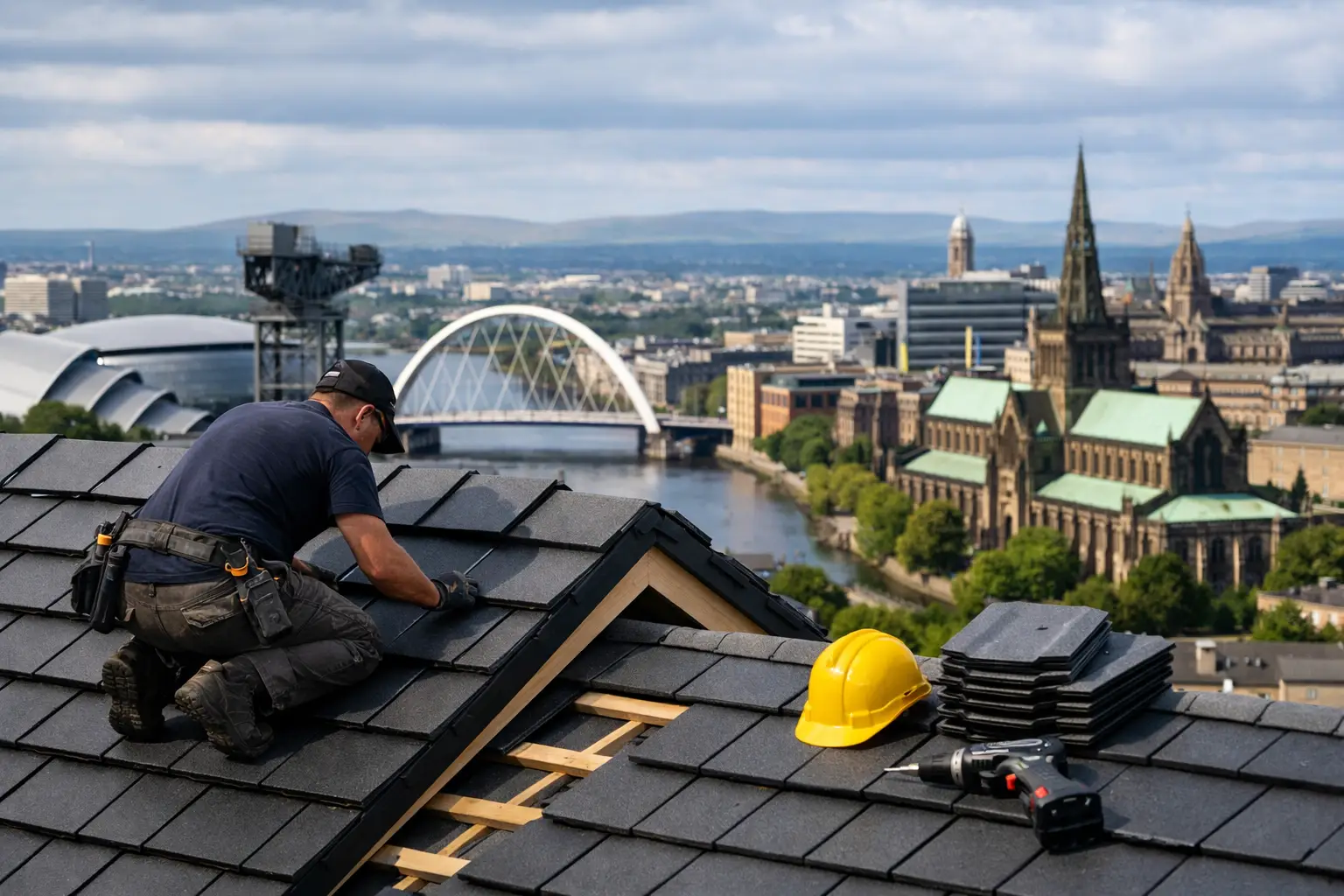
If you are asking how much does a new roof cost in Glasgow in 2026, you are probably not shopping for fun. Most people start looking after a leak, slipped tiles, storm damage, or years of patch repairs that are no longer worth paying for. The honest answer is that roof replacement costs vary a lot, but for most Glasgow properties, the price depends on roof size, access, materials, condition of the existing structure, and whether extra works are needed at the same time.
For a straightforward replacement on an average house, many homeowners in Glasgow can expect a new roof to start from a few thousand pounds and climb significantly for larger, older, or more complex properties. That gap is wide for a reason. A small mid-terrace roof is a very different job from a large detached property with chimneys, valleys, dormers, and ageing timbers underneath.
How much does a new roof cost in Glasgow in 2026?
As a practical guide, a basic roof replacement on a smaller home might fall around £4,500 to £7,000. A typical semi-detached house often lands somewhere between £6,500 and £10,500. Larger detached homes and more complex roofs can move into the £10,000 to £18,000 range and sometimes beyond that.
These figures are not fixed rates. They are working estimates based on common residential roofing jobs in and around Glasgow. If your roof has structural movement, rotten battens, damaged felt, failing leadwork, or difficult scaffold requirements, the total will rise. If the roof is simple, access is good, and the covering can be replaced without major remedial work, it may come in at the lower end.
Flat roofs are priced differently. A small garage or extension flat roof may cost roughly £1,500 to £4,000, while larger flat roofing systems using EPDM, PVC, or TPO can be considerably more depending on insulation, upstands, outlets, and edge details. Commercial roofs vary even more, especially where traffic management, safety systems, or phased works are involved.
What drives the cost of a new roof?
The biggest factor is size. More square metres means more tiles or membrane, more battens, more labour, more waste removal, and usually more scaffold. That part is straightforward.
The next issue is complexity. A plain pitched roof is faster and easier to replace than one with several ridges, hips, valleys, skylights, chimneys, and awkward junctions. Every extra feature adds labour and detail work. Those details matter because weak points on a roof are often where water gets in first.
Material choice also changes the price. Concrete tiles are usually more budget-friendly than natural slate. Natural slate can look excellent and last well, but it costs more to supply and fit. Flat roofing systems also vary. Felt may suit some budgets, while EPDM, PVC, and TPO often appeal to owners looking for modern systems with strong performance and lower maintenance demands.
Then there is the condition of what sits beneath the outer covering. A quote for a new roof is not only about tiles or sheets on top. If the decking, battens, underlay, flashings, fascias, soffits, or guttering need replacement too, that increases the total. On older Glasgow properties, it is not unusual to uncover issues only once the roof is stripped back.
Roof type matters more than people expect
A tiled pitched roof and a slated pitched roof are not priced in the same way, even if the size looks similar from the street. Slate is often chosen for appearance and longevity, particularly on traditional properties, but it needs the right handling and installation. If you own an older sandstone property or a home in an area where appearance matters, your options may be shaped as much by the building as by the budget.
Flat roofs bring a different set of decisions. If you are replacing a flat roof over an extension, garage, dormer, or commercial unit, the cheapest option is not always the best value. A properly installed system with good detailing around edges and penetrations is usually worth paying for. Saving money on materials only to face premature splits, ponding, or joint failure is rarely a bargain.
The hidden costs people forget about
When comparing prices, many property owners focus only on the top-line figure. That is understandable, but it can lead to poor decisions. Two roofing quotes can look similar in scope while being very different in quality.
Scaffolding is a major cost on many jobs, especially on busy streets, taller properties, or homes with restricted access. Waste removal is another. So is replacing lead flashings properly rather than patching around them. Ventilation upgrades, insulation improvements, and timber repairs can also appear once work begins if the original roof has been masking deeper problems.
This is why a proper inspection matters. A quick price given from ground level may sound attractive, but it often leaves room for expensive surprises later. A clear written quotation should explain what is included, what has been assumed, and what may cost extra if defects are uncovered.
How much does a new roof cost in Glasgow for different property types?
For a small terrace or cottage, costs are usually lower because the roof area is smaller and the layout is simpler. For semis, prices tend to sit in the middle of the range, though shared boundaries and access can affect scaffold and labour. Detached homes often cost more because there is simply more roof to replace, and many have extra design features that increase fitting time.
Tenement and mixed-use properties are another matter. In Glasgow, these can be more complex due to height, access, shared ownership issues, and the condition of older roof structures. If several owners are involved, agreeing the scope of work and standard of materials can take almost as long as planning the job itself.
Landlords and commercial property owners should also think beyond the replacement cost alone. Downtime, tenant disruption, access safety, and long-term maintenance all affect value. A lower upfront quote can become the expensive option if the roof needs attention again in a few years.
Repair or replacement?
Not every failing roof needs a full replacement. If the problem is limited to a section of slipped tiles, flashing damage, storm impact, or localised wear, a repair may be the sensible route. A reputable contractor should be willing to say that.
That said, repair-after-repair is not always the economical choice. If the roof is nearing the end of its service life, if leaks keep returning, or if previous patching has become widespread, replacement often makes better financial sense. You spend more upfront, but you stop chasing the same problem every winter.
For many property owners, the right decision comes down to age, condition, and risk. If a roof is failing across several areas, replacing it properly is usually the safer and more durable option.
How to compare roofing quotes properly
A good quote should tell you exactly what you are paying for. That includes the roofing material, underlay, battens, ridge system, flashings, ventilation, waste removal, scaffold, and any associated items such as gutters, fascias, and soffits if they are part of the work.
You should also look at who is carrying out the work. An insured, qualified roofing team with proven local experience is not the same as a cheap price from someone who appears after a storm and disappears once paid. Roofing is one of those jobs where poor workmanship costs more to put right than doing it properly in the first place.
It is also worth asking about guarantees and expected timescales. Delays can happen, especially with poor weather, but a professional contractor should still give you a realistic programme and communicate clearly throughout the job.
Is 2026 a more expensive year for roofing?
Compared with previous years, roofing costs in 2026 are still shaped by material pricing, labour demand, and compliance costs. That does not mean every roof is suddenly unaffordable, but it does mean older guide prices found online are often out of date. If you are budgeting based on numbers from several years ago, there is a fair chance the real cost will be higher.
In Glasgow and the surrounding area, weather exposure also matters. Roofs here need to stand up to wind-driven rain, cold conditions, and repeated storm cycles. Paying for the right materials and workmanship is not about buying extras for the sake of it. It is about reducing the chance of further damage to ceilings, insulation, electrics, and internal finishes.
Trusted Roofing Ltd sees this regularly on both homes and commercial buildings. What starts as a roofing problem rarely stays only a roofing problem for long.
The best next step is not to chase the lowest number. It is to get a proper inspection, understand the condition of the roof beneath the surface, and ask for a clear quotation that matches the building you actually have. That way, whether you are in Glasgow, East Kilbride, Bearsden or Wishaw, you can make a decision based on value, not guesswork.