
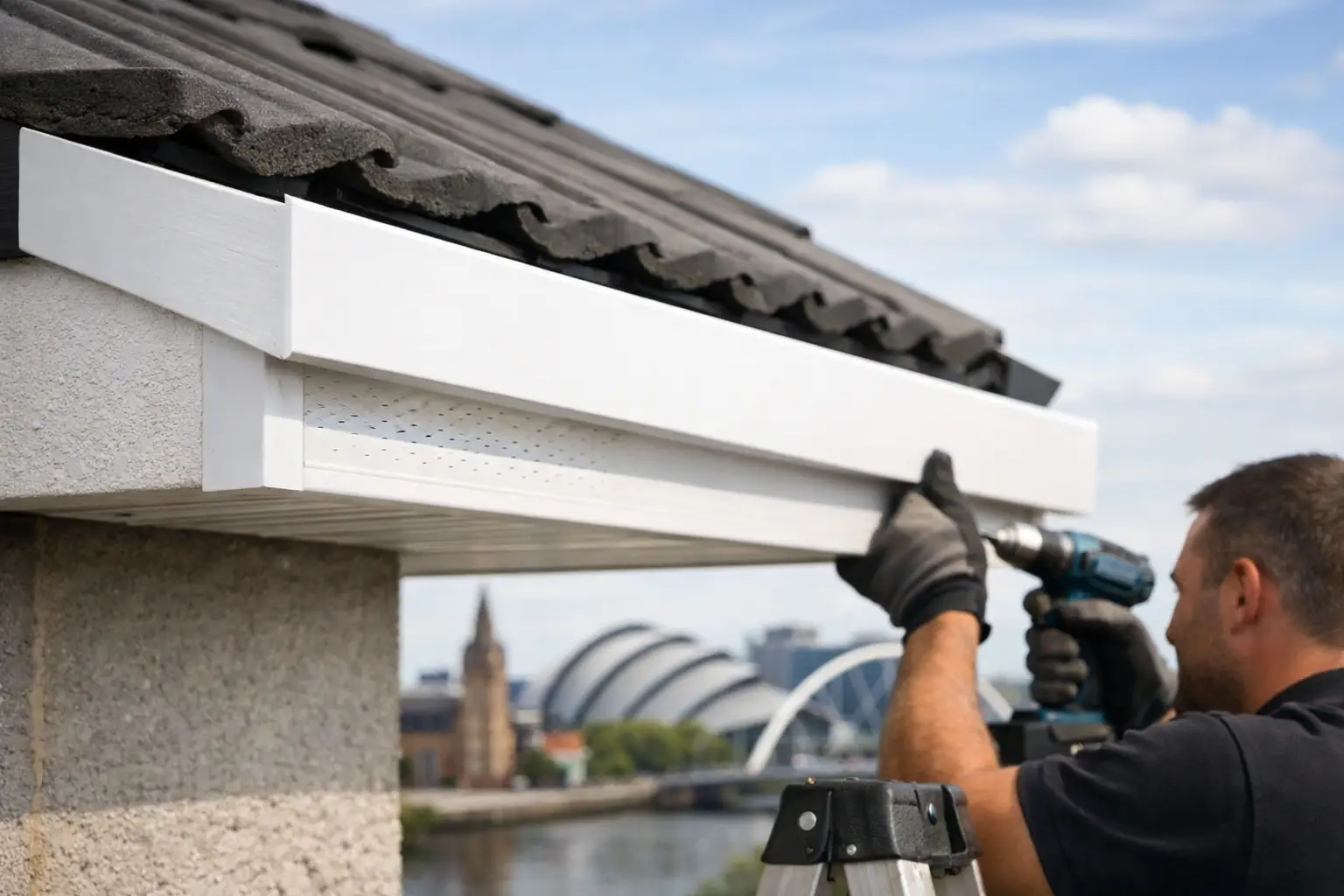
When fascias and soffits start to fail, the signs are rarely subtle for long. Peeling paint, damp patches near the roofline, overflowing gutters and birds getting into the eaves usually mean the problem has already moved beyond appearance. If you are looking for fascia soffit replacement Glasgow property owners can rely on, it helps to understand what these components do, what goes wrong, and when replacement makes more sense than another short-term repair.
Fascias and soffits protect one of the most exposed parts of any property. The fascia board runs along the lower edge of the roof and supports the guttering. The soffit sits underneath, closing the gap between the wall and the roof overhang. Together, they help keep water out, improve ventilation to the roof space and give the roofline a clean, finished look. When they are damaged or worn out, that protection starts to break down.
Why fascia and soffit condition matters
In Glasgow, roofs take a steady battering from rain, wind and winter weather. That constant exposure means the roofline often shows wear before other parts of the property. If the fascias are rotting, cracked or pulling away, gutters can lose support and begin to sag. Once that happens, rainwater no longer drains as it should and can start running down external walls or back towards the roof structure.
Soffits matter just as much. A damaged soffit can let moisture into the eaves and reduce the airflow your roof space needs. Poor ventilation may lead to condensation, mould and timber decay over time. In some cases, what starts as a roofline issue turns into a more expensive roofing repair because the problem has been left too long.
This is why roofline work should never be treated as a cosmetic extra. Good fascias and soffits help protect the structure, keep guttering secure and reduce the risk of hidden water damage.
Signs you may need fascia soffit replacement in Glasgow
Not every roofline issue means full replacement is needed, but there are clear warning signs that should not be ignored. Rotting timber is one of the most obvious. If the existing boards feel soft, flake apart or show blackened areas, they are already past their best.
You may also notice paint that repeatedly peels despite repainting, joints opening up, sections bowing, or gutters pulling away from the fascia. Inside the property, damp around the upper walls or loft space can point to water entering at roofline level. Pest activity is another clue. Birds, wasps and squirrels often exploit damaged soffits or gaps in the eaves.
Older properties across Glasgow and surrounding areas can also have roofline boards that were capped over years ago rather than properly replaced. Capping can look tidy from ground level, but if the timber underneath is deteriorating, the problem remains hidden until it worsens. In that situation, a proper inspection is the only way to know whether repair is worthwhile or whether replacement is the more durable option.
Repair or replacement – what is the better choice?
This depends on the condition of the existing roofline and the age of the materials. If the issue is localised, such as a loose section of guttering or minor damage to one short run of fascia, a repair may be enough. A repair-first approach is often the right recommendation when the main structure is still sound.
If there is widespread rot, recurring water problems, multiple weak areas or failing fixings, replacement is usually the better investment. The same applies where old timber boards have been repeatedly patched and painted over the years. Spending money on another temporary repair can cost more in the long run if the roofline continues to fail and starts affecting the rafters, insulation or masonry below.
A reliable contractor should be honest about that balance. Not every job needs a full replacement, but when the existing fascias and soffits are no longer doing their job properly, replacement gives you a clean start and far better long-term value.
What happens during fascia soffit replacement Glasgow jobs?
A proper replacement job starts with access and inspection. The old fascias, soffits and often the guttering are removed so the roof edge can be checked properly. This part matters. It reveals whether the timber ends, felt support trays or other roofline components have suffered water damage.
If repairs to the underlying structure are needed, they should be completed before new materials go on. The replacement boards are then fitted securely, with attention paid to ventilation, alignment and support for the gutter system. Where needed, new gutters and downpipes can be installed at the same time.
This is also the point where small details make a difference. Clean joints, correct falls on guttering, neat corners and proper sealing all affect how well the system performs. A rushed installation may look fine at first but lead to leaks, movement or poor drainage later.
For homeowners and landlords, the benefit of doing the work properly is straightforward. You get a roofline that looks sharper, protects better and requires far less upkeep than ageing timber.
Choosing the right materials for your roofline
Most modern fascia and soffit replacements use low-maintenance UPVC. For many properties, this is the practical choice. It does not rot, it keeps its appearance well and it avoids the cycle of regular sanding, filling and painting that timber often needs.
That said, material choice can still depend on the property. Some homeowners want a finish that suits the style of an older house, while some commercial owners are more focused on durability and minimal disruption. The right option is usually the one that balances appearance, budget and lifespan rather than simply choosing the cheapest board available.
Quality matters here. Better-grade materials and proper fitting standards generally last longer and hold up better in poor weather. Thinner or lower-quality products may reduce the quote at the start, but they can be more prone to warping, discolouration or early failure.
How much does fascia and soffit replacement cost?
The cost varies depending on the size of the property, the ease of access and whether the guttering also needs replaced. The condition of the roof edge underneath also affects price. If hidden timber repairs are needed once the old boards come off, that changes the scope of the work.
A simple semi-detached house will cost less than a larger detached property or a commercial building with more complex access requirements. Scaffolding, conservatories, extensions and awkward roof heights can all add to the total. This is why an inspection and clear written quotation matter more than rough online figures.
The cheapest quote is not always the best value. If one contractor is pricing to cap over old timber and another is allowing for full removal and proper replacement, the numbers may look very different for a good reason. Like any roofing work, you want to know exactly what is included.
Why local experience matters
Roofline work in Glasgow is not just about fitting boards. It is about understanding how local weather affects roof edges, gutter capacity and long-term performance. Heavy rainfall, driving wind and blocked gutters can all put extra strain on the fascia line, especially on older properties.
An experienced local contractor will know what commonly fails, what to look for during inspection and how to recommend work that suits the building rather than applying the same fix everywhere. That practical judgement matters. Some homes need only targeted repairs. Others benefit from a full replacement because years of exposure have already taken their toll.
At Trusted Roofing Ltd, that sort of straight advice is central to the job. Property owners want to know what needs done now, what can wait and what will give them the best value over time.
What to look for before you book the work
Before agreeing to any fascia and soffit replacement, make sure the contractor is insured, experienced and clear about the scope of the job. Ask whether the quote includes removal of old materials, disposal, any timber repair if required and replacement of the guttering if necessary.
It is also worth checking whether workmanship is guaranteed. Good tradespeople stand behind their work because they know the installation is only as good as the details behind it. A free inspection is useful too, especially if you are not yet sure whether you need repair or replacement.
If you own a rental property or manage a commercial building, speed and reliability matter just as much as cost. Delaying roofline work often leads to more disruption later, especially if water ingress starts affecting tenants, stock or internal finishes.
A sound roofline is one of those parts of a property that rarely gets much attention until it starts causing problems. Deal with it at the right time, and you protect the rest of the building while avoiding bigger repair bills down the line.