
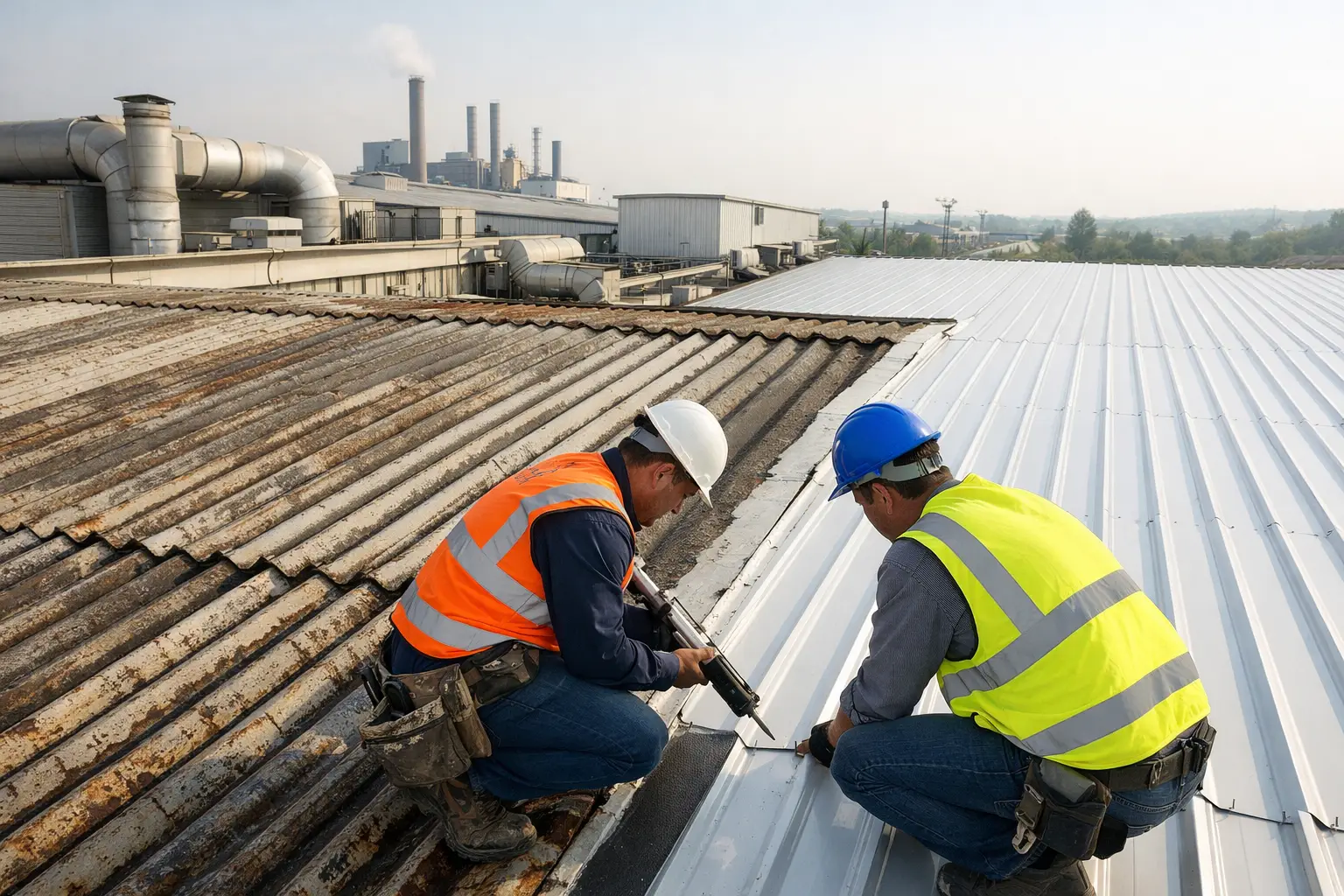
A roof leak above a production line is not simply a maintenance issue. It can damage stock, interrupt operations, create a safety risk and leave a business facing an avoidable insurance claim. Factory roof restoration gives property owners a practical way to extend the life of an industrial roof before small defects turn into major disruption.
For factories, warehouses and workshops across Glasgow and Lanarkshire, the right answer is rarely to replace everything at the first sign of wear. A careful inspection can identify whether targeted repairs, a protective coating system or a planned replacement will provide the best long-term value.
When Does a Factory Roof Need Attention?
Industrial roofs work hard. They are exposed to driving rain, frost, strong winds, standing water and regular thermal movement. On a large roof area, even a small split in a membrane, failed lap joint or loose flashing can allow water to travel a considerable distance before it becomes visible inside.
Warning signs should be taken seriously, particularly where the building contains machinery, electrical systems or stored goods. Recurring leaks, damp patches, blocked outlets, ponding water, damaged rooflights, blistered felt, corroded metal sheets and loose perimeter trims all justify a professional inspection.
A roof does not need to be actively leaking to need restoration. Ageing surfaces can become brittle, seams can weaken and drainage can deteriorate gradually. Addressing these issues early is usually less expensive and far less disruptive than waiting for a failure during severe weather.
Factory Roof Restoration Starts With a Proper Survey
Before recommending a solution, a qualified roofer should establish what is happening beneath and above the visible surface. The roof covering may look tired while the insulation, deck and structural elements remain sound. Equally, a neat-looking surface can conceal trapped moisture or extensive deterioration around penetrations and outlets.
Checking the Whole Roof System
A meaningful survey looks beyond the obvious leak point. It should assess the roof covering, seams and joints, flashings, gutters, valleys, rooflights, upstands, drainage falls and the condition of the substrate. On metal and composite roofs, fixings, sheet overlaps and corrosion need close attention. On flat roofs, particular focus should be given to ponding areas, parapet details and any previous repair patches.
This is why repair-first advice matters. Replacing a roof that can be restored wastes budget. Applying a coating to a roof with saturated insulation or failed structural sections, however, only delays a larger problem. The best option depends on the roof’s age, construction, condition and expected service life.
Separating Local Defects From Widespread Failure
Localised damage often responds well to targeted repair work. This may include renewing failed flashings, repairing membrane splits, resealing laps, replacing damaged sheets, clearing drainage routes or repairing sections around rooflights and vents.
Where the roof is broadly weather-tight but the surface is deteriorating, a restoration system may be more appropriate. This can involve thorough preparation, local repairs and a compatible coating or overlay designed to improve waterproofing and reflect sunlight. If failures are widespread, insulation is compromised or the roof deck is unsound, replacement is often the safer investment.
Choosing the Right Factory Roof Restoration Method
There is no one material or process that suits every industrial building. The existing roof, future use of the premises and access requirements all influence the recommendation.
For flat or low-pitched factory roofs, modern single-ply systems such as EPDM, PVC and TPO can offer durable weather protection when correctly specified and installed. EPDM is known for flexibility and resilience, while PVC and TPO are commonly selected for larger commercial roofs where welded seams and reflective finishes are beneficial. Felt systems and liquid-applied solutions can also be suitable, particularly for complex roof details.
Metal roofs may need a different approach. If the sheets remain structurally sound, repairs to fixings, seals, overlaps and corrosion points can be combined with a protective coating system. Where sheets are heavily corroded, poorly fixed or repeatedly leaking, overcladding or replacement may provide a more dependable result.
The trade-off is straightforward: restoration normally involves less disruption and lower upfront cost, but it must be technically suitable. A full replacement costs more initially, yet may provide a longer service life and an opportunity to improve insulation, drainage and energy performance.
Keeping Production and Staff Safe During Works
Factory roofing work needs planning around the business, not just the roof. Access routes, delivery times, working hours, noise, dust and the location of fragile rooflights should all be considered before work begins. A contractor should also account for how roof activity may affect people below, particularly in active loading areas, manufacturing spaces and storage zones.
A well-managed programme generally includes four clear controls:
- safe access, edge protection and properly planned work areas;
- protection for stock, equipment and internal operations beneath active work zones;
- phased repairs where the roof is too large or the business cannot pause production; and
- regular communication with the site manager about weather, progress and any unexpected findings.
Weather is a major factor in Scotland. Some repairs can be completed quickly between wet periods, but coating and membrane installations often need dry conditions and suitable temperatures. A responsible contractor will not rush materials onto a damp surface simply to meet an unrealistic date. That decision protects the quality of the finished roof.
The Cost of Restoration Versus Replacement
The cost of factory roof work is influenced by far more than square metreage. Roof access, height, existing materials, extent of water damage, drainage repairs, rooflight work, the need for scaffolding or lifting equipment, and whether the site remains operational all affect the quotation.
The cheapest quote is not always the most affordable option over time. A patch that does not address failed drainage or deteriorated seams may lead to repeated call-outs, water damage and lost working hours. On the other hand, a large replacement proposal should be supported by clear evidence where a repair or restoration system could safely extend the roof’s life.
A transparent quotation should explain the scope of work, materials to be used, preparation required, any exclusions and the workmanship guarantee. It should also make clear whether issues such as rotten decking, saturated insulation or hidden corrosion would be treated as additional work if uncovered. Honest information at this stage allows facilities managers and owners to budget properly.
Preventing Repeat Problems After the Work Is Done
Restoration is most effective when it is followed by maintenance. Gutters and outlets need to remain clear, especially after autumn leaf fall or storms. Roof penetrations should be checked after any new plant, cabling or ventilation work, as these are common sources of leaks when poorly sealed.
Planned inspections can catch damage caused by wind, fallen debris or trades working on the roof before it becomes an internal problem. For older buildings, an annual inspection and a check after severe weather is sensible. High-traffic roofs or buildings with complex drainage may benefit from more frequent attention.
Trusted Roofing Ltd provides practical commercial roofing advice, repairs and replacement work for businesses that need a dependable solution rather than a rushed sales pitch. Our insured, qualified team can inspect the condition of your factory roof, explain the options clearly and provide a transparent quotation for the work required.
If water is getting into your premises, do not wait for the next heavy spell of rain to test the damage. Arrange a professional roof inspection while the issue is manageable, and give your business the protection it needs to keep operating with confidence.