
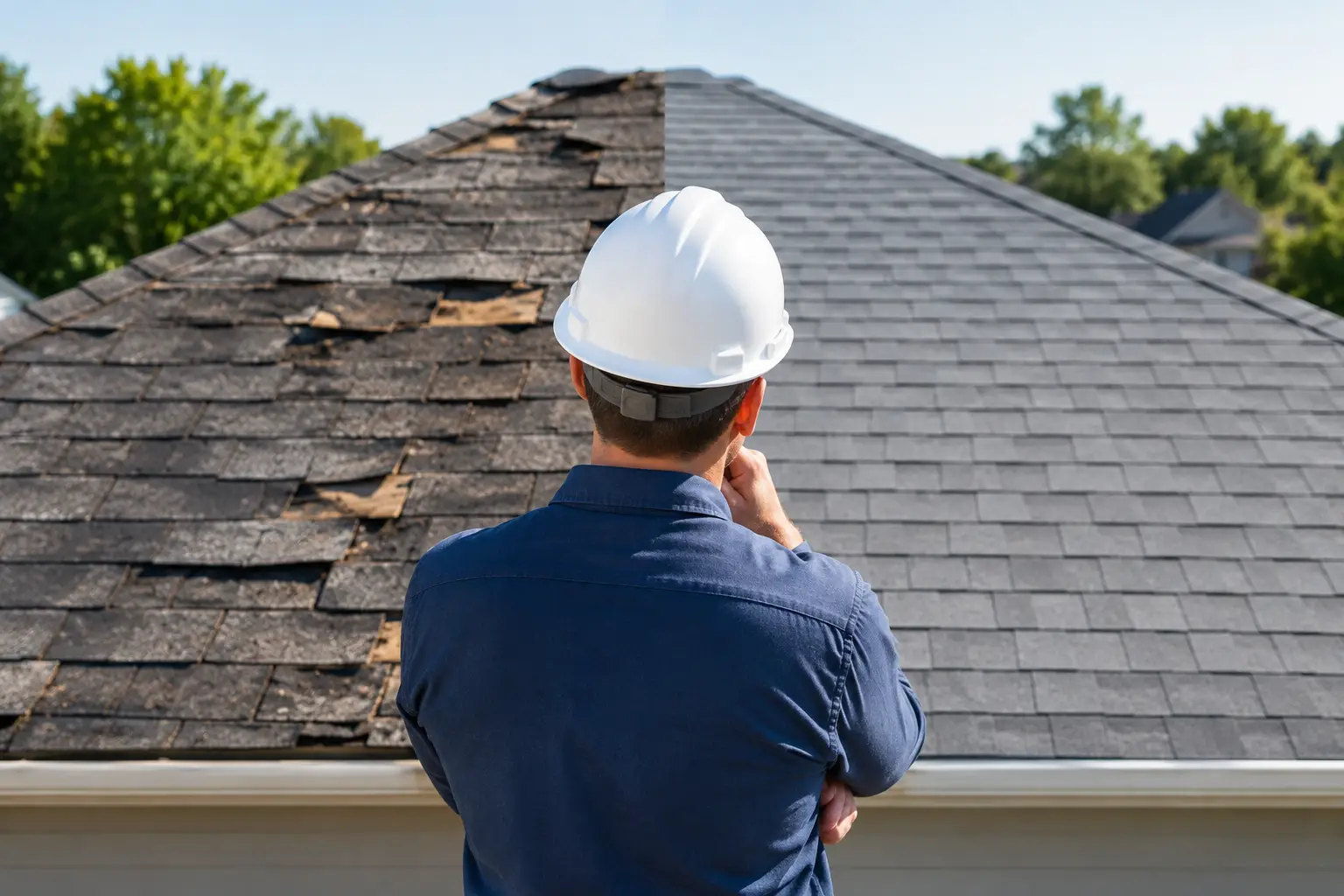
A damp patch spreading across a bedroom ceiling after heavy rain is not a problem to put off until spring. It raises a practical question: is roof repair or overlay the sensible answer? The right choice depends on what is happening beneath the surface, not simply what can be seen from the ground.
For many property owners, a targeted repair offers the best value and protects a sound roof for years to come. In other cases, an overlay may seem like a quicker, lower-cost alternative to replacement, but it can also conceal faults that need proper attention. A thorough inspection is the only dependable way to decide.
What is a roof repair?
Roof repair means dealing directly with a localised fault while retaining the rest of the existing roof covering. On a pitched roof, this may involve replacing cracked or slipped slates and tiles, renewing lead flashing around a chimney, repairing valleys, fixing ridge tiles, or addressing damaged underfelt and battens in a confined area.
On a flat roof, repair work can include sealing splits, renewing failed joints, repairing flashings, improving drainage, or replacing a damaged section of membrane. Modern systems such as EPDM, PVC and TPO can often be repaired successfully when the wider roof remains in good condition.
A repair-first approach makes sense when the roof is broadly sound, the damage is limited, and there is no evidence of widespread water ingress or structural decay. It is usually less disruptive than larger works and avoids paying for materials that do not yet need replacing.
That said, a patch is only worthwhile if it solves the cause of the leak. Water can travel along timbers, insulation or membranes before showing inside, so the visible damp area is not always directly below the defect. This is why experienced inspection matters more than a quick sealant application.
What does a roof overlay involve?
An overlay is the installation of a new roofing layer over an existing one rather than stripping the old covering back first. The term is most commonly used for flat roofs. For example, a compatible new membrane may be fitted over an existing felt roof where the deck is dry, stable and structurally suitable.
An overlay can reduce labour, waste removal and disruption because the old roof covering stays in place. It may also provide a fresh waterproof surface sooner than a complete strip-and-recover project. For commercial buildings, where closing part of a site can be difficult, this can be a genuine advantage.
However, an overlay is not automatically the cheaper option in the long term. If moisture is trapped below the existing covering, if the roof deck has softened, or if the old roof has multiple failed layers, covering it can leave the original issue in place. The new surface may look excellent while deterioration continues underneath.
A competent roofer will assess the existing roof, its drainage falls, insulation, edges, upstands and penetrations before recommending an overlay. The condition of the substrate is central to the decision.
Roof repair or overlay: the key deciding factors
The decision should be based on evidence, not on the shortest quote or the appearance of the roof from street level. Age is relevant, but it is not the only consideration. A well-maintained older roof may need a straightforward repair, while a newer roof with poor drainage or incorrectly fitted details may need more substantial work.
The extent and source of water damage
One leak after a storm can result from a displaced tile, a torn membrane or failed flashing. These are often repairable. Repeated leaks in different areas, bubbling on a flat roof, sagging sections, mould in the roof space or stained ceilings across several rooms point to a wider problem.
With flat roofs, trapped moisture is a particular concern. A professional inspection may identify soft areas, blistering, standing water or weak points around outlets and parapet walls. If the deck is wet or degraded, stripping back the covering may be safer than adding another layer above it.
The roof’s condition and remaining life
A repair is good value when it extends the serviceable life of a roof that is otherwise sound. It is false economy when the materials are nearing the end of their life across the whole area. Replacing a few tiles on a roof with widespread cracking, failing mortar and worn underlay may only delay a more expensive job.
For an overlay, the existing roof must provide a stable base. If it has already been overlaid before, adding another layer can increase weight and make future fault-finding more difficult. Building details at doors, thresholds, gutters and roof edges also need enough height to accommodate the new system safely.
Drainage and roof design
Glasgow’s regular rainfall is unforgiving of poor drainage. A flat roof that holds water after a shower needs investigation before any repair or overlay. Standing water puts added strain on joints and membranes, and it can shorten the life of any new covering.
Sometimes the real solution is to correct falls, renew outlets, clear blocked gutters or improve the detailing where the roof meets walls. An overlay without resolving drainage may simply give the same water problem a newer surface.
Cost now versus cost later
A small repair generally costs less upfront than an overlay or replacement. But the best decision is not always the lowest immediate price. Ask what work is included, why it is being recommended, how long it is expected to last, and what guarantee applies.
An overlay can be cost-effective where the existing structure is dry and stable. A full replacement can be the better investment where hidden defects are likely or where insulation and drainage need upgrading. Clear quotations should explain these differences rather than treating every leak as the same job.
When repair is usually the better choice
Repair is often the right route after storm damage, around chimneys and roof windows, or where a small part of a flat roof has suffered an isolated puncture or split. It is also suitable for routine issues such as loose ridge tiles, damaged pointing, defective flashing and leaking gutters affecting the roofline.
The main benefit is proportionate work. You preserve good materials, limit disruption and deal with the immediate weakness before it develops into timber damage or internal damp. For landlords and commercial property managers, prompt repairs can also prevent a minor defect becoming a tenant complaint, insurance issue or interruption to operations.
A quality repair should match the existing roof as closely as practical and address the surrounding details, not just the obvious hole. The workmanship around edges, joints and flashings is often what determines whether the repair lasts.
When an overlay may be suitable
An overlay may suit a flat roof that has reached the end of its waterproofing life but still has a dry, firm deck and acceptable drainage. It can be a practical route for garages, extensions, workshops and some commercial roofs where a compatible modern membrane can be installed correctly over the existing surface.
It is not normally a shortcut for a failing pitched roof. Pitched roofs require proper assessment of tiles or slates, battens, underlay, valleys and structural timbers. Covering over defects rather than accessing them can create avoidable problems.
Before agreeing to an overlay, ask whether the roof has been moisture-tested, whether existing layers are secure, how drainage will be managed, and what happens if hidden defects are found. A reputable contractor will be direct about the limits of the option.
Warning signs that need urgent attention
Some roofing issues should be assessed quickly, especially after high winds or prolonged rain. Water entering the property, a visibly sagging roof area, loose slates or tiles at height, damaged chimney flashing, or overflowing gutters near the eaves can all lead to further damage if left untreated.
Do not climb onto the roof to investigate. Aside from the risk of a fall, walking on damaged materials can make the fault worse. Photograph visible signs safely from ground level if possible, move belongings away from internal leaks, and arrange a professional inspection.
Trusted Roofing Ltd provides practical roof inspections, repairs and emergency response across Glasgow and surrounding Lanarkshire areas. With qualified, insured tradespeople and guaranteed workmanship, the focus is on identifying the cause of the problem and recommending work that makes sense for the property.
Get the diagnosis before choosing the method
The best answer to roof repair or overlay is rarely found in a photograph or a quick glance from a ladder. A proper inspection should check the roof covering, flashings, drainage, roofline components and, where accessible, the condition beneath the surface.
If the roof can be repaired properly, that is often the most cost-effective outcome. If an overlay is suitable, it should be installed only after the existing roof has been shown to be dry, secure and structurally sound. And where neither option will provide a reliable result, honest advice should point towards replacement rather than repeated temporary fixes.
A free, clear assessment gives you the facts to protect your home or premises before a small roofing fault becomes a much larger repair.